
How to inspect your attic for roof leaks in Dallas
A practical, Dallas-specific guide to inspect your attic for roof leaks in Dallas: what to look for, where leaks start, and when to call a pro for roof leak repair.
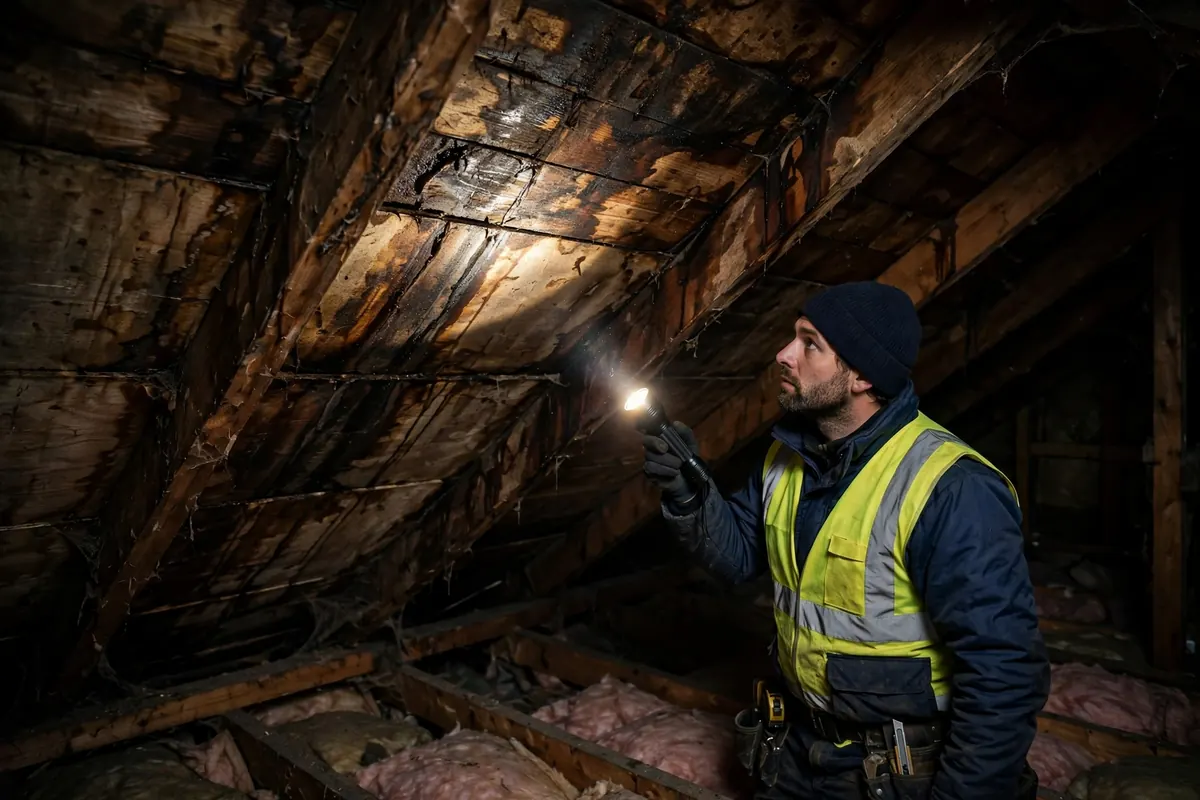
Your attic usually shows a roof leak before your ceiling does. Stains on the decking, damp insulation and daylight through a gap are all visible from inside, and catching them early is the difference between a small repair and a sagging ceiling. This guide covers what to bring, where Dallas leaks start, and how to tell a roof leak from condensation or an air-conditioning problem — and where to stop and call a roofer.
The quick answer: inspecting your attic for roof leaks
Look for stains on the decking, damp insulation and daylight through gaps, and trace any stain back along the decking — the entry point is rarely directly above it. If the decking is sagging or the leak is active, call a professional rather than working in the attic.
What to bring and how to stay safe in a Dallas attic
Bring a bright flashlight, a phone for photos, and a dust mask. Wear long sleeves, gloves and a hat — attic insulation irritates skin and lungs, and Dallas attics in summer can reach temperatures well above the outside air, so go in the morning and keep the visit short. Step only on the joists, never on the drywall or insulation between them; a foot through the ceiling is a common and expensive accident. If the attic has no flooring, lay a board across the joists to stand on. Do not enter an attic with visible mould growth, a sagging ceiling below, or wiring that looks damaged — those are roofer and electrician jobs, not homeowner checks. And never walk on the roof itself to chase a leak you found in the attic; the attic tells you where the water is, the roofer finds where it gets in.
Where roof leaks actually start in Dallas homes
In Dallas homes, leaks start at the details, not in the middle of a slope. The most common entry points are pipe boots and vents, where rubber seals dry out in the heat; flashing around chimneys, skylights and walls; valleys, where two slopes meet and water concentrates; and nail pops, where a fastener has worked its way up through a shingle. Hail makes it worse: a bruised shingle loses granules, the asphalt underneath breaks down in the sun, and the next rain finds the weak spot. Wind lifts shingle tabs at the edges and ridges, which is why leaks often appear after a storm even though the roof looked fine before it. In older homes in Lakewood, the M-Streets and Oak Cliff, the decking itself can be part of the story — 1 by 6 board decking with gaps between boards lets water through more readily than modern plywood once the underlayment fails.
Step-by-step attic inspection for Dallas roof leaks
Work in this order, and photograph everything you find.
- Look for daylight. Turn the flashlight off and look for pinpoints of light through the decking. Daylight means a hole, and a hole means water.
- Scan the decking for stains. Dark streaks, rings and discoloured wood mark where water has run. Stains usually run downhill from the entry point, so the leak is above the top of the stain.
- Check around every penetration. Look at the underside of pipe boots, vents, chimneys and skylights. Damp wood, staining or daylight around a penetration is the most common finding.
- Feel the insulation. Damp, compressed or stained insulation marks a leak path. Dry insulation above a ceiling stain usually means the leak is old or intermittent.
- Look at the valleys and ridges from inside. Staining along a valley line points to valley flashing trouble.
- Check the ventilation. Blocked soffit vents and a hot, stuffy attic make condensation worse and age shingles faster.
Write down where each stain is, relative to a chimney, vent or valley, and take a photo with the flashlight on it. That record is exactly what a roofer needs to trace the leak from outside.
How to tell a roof leak from condensation or an HVAC problem
Not all attic water is a roof leak. Condensation forms when warm, humid house air meets a cold surface, and it shows as a general dampness or light frost-like moisture across a wide area, often near bathroom vents that dump into the attic instead of outside. An air-conditioning problem shows as water near the air handler or a drain line, often with a musty smell and a wet patch that grows when the system runs. A roof leak is different: it follows a line, it stains wood in a clear path, and it appears or worsens after rain. If the attic is wet after a dry week, think condensation or air-conditioning first. If it is wet after a storm and the stain has a clear path from a penetration or valley, think roof. When in doubt, a leak detection and repair visit settles it — the roofer tests the roof, not the guess.
What to watch out for during your inspection
Watch for mould growth on the decking or rafters, which needs a specialist, not a roofer alone. Watch for sagging decking or rafters, which can mean structural damage — Dallas requires a separate alteration permit for structural rafter or joist damage, so this is not a quick fix. Watch for damaged wiring or chewed insulation, which suggests pests. And watch for the temptation to fix it from inside: sealant or patching applied to the underside of the decking does not stop water getting in, it traps it. The repair happens on the outside, at the entry point. Our roof repair in Dallas page explains how an outside repair is scoped.
When to call a professional
Call a roofer when you find staining, daylight, damp insulation or a sagging section — and call at once if water is actively dripping. A professional roof inspection in Dallas traces the stain to its entry point on the outside, checks the flashing and penetrations, and gives you a written scope. If the attic shows a leak in a period home in Lakewood or the M-Streets, say so when you call: steep pitches, dormers and board decking change how the inspection is done.
Frequently Asked Questions
How do I inspect my Dallas attic for roof leaks?
Go in the morning with a flashlight and a phone. Step only on joists, look for daylight through the decking, scan for stains, check around every penetration, and feel the insulation for damp spots. Photograph what you find and note where each stain sits relative to a chimney, vent or valley.
What are signs of a roof leak in my Dallas attic?
Dark stains or rings on the decking, damp or compressed insulation, daylight through a gap, and staining around pipe boots, vents, chimneys and skylights. Stains usually run downhill from the entry point, so the leak is above the top of the stain.
Can I fix a roof leak from inside the attic in Dallas TX?
No. Sealant or patching on the underside of the decking traps water instead of stopping it. The repair happens on the outside, at the entry point. The attic tells you where the water is; the roofer finds where it gets in.
Who does roof leak detection in Dallas Texas?
Fonseca Brothers Roofing & Remodeling traces attic stains to their entry point on the outside, checks flashing and penetrations, and gives a written scope. Call (469) 960-7533 — open 24 hours.
How do I tell a roof leak from condensation in my attic?
A roof leak follows a clear path and appears or worsens after rain. Condensation is a general dampness across a wide area, often near bathroom vents that dump into the attic. Water near the air handler points to an air-conditioning drain problem.
Get help with Roofing in Dallas
If your attic is showing stains, daylight or damp insulation, do not wait for the next storm. Call Fonseca Brothers Roofing & Remodeling at (469) 960-7533 — open 24 hours — and we will trace the leak to its source.
Sources
Sources for the facts in this guide: