
Signs your Dallas roof has hail damage
Hail hits Dallas roofs hard. Learn the real signs of hail damage on a Dallas roof, how to check safely, and when to call for a professional inspection.
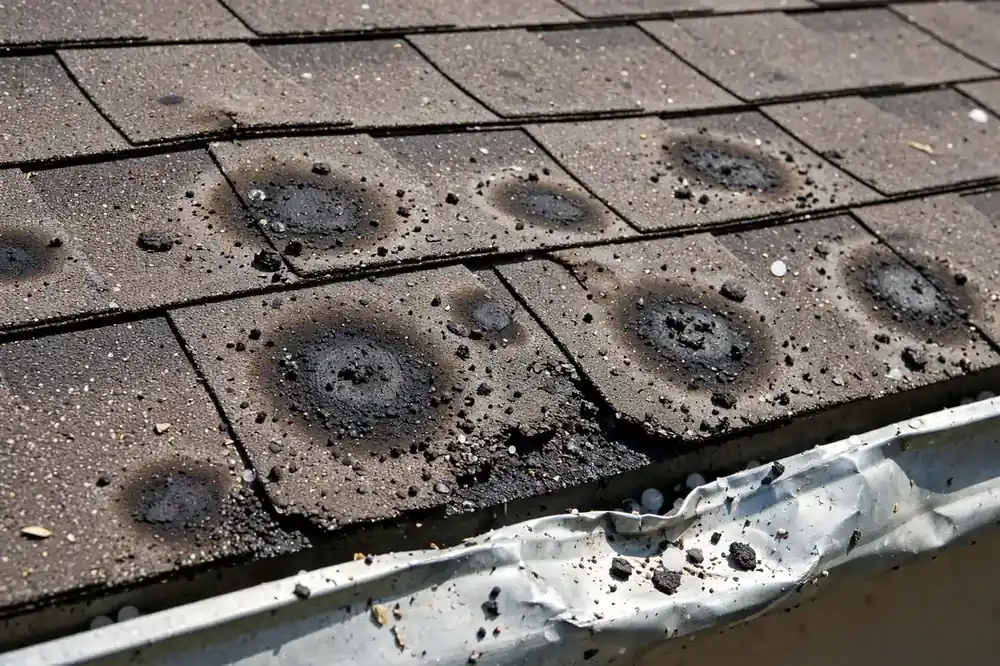
The clearest signs of hail damage on a Dallas roof are bruised or soft spots on shingles, granule loss that exposes the asphalt mat, dented metal flashing and vents, and cracked or chipped shingle edges. If you can see any of those after a storm, the roof needs a professional look. This guide walks through what hail damage looks like up close, how to check safely from the ground, how Dallas storms differ from other Texas weather, and what to do before you talk to your insurer.
The quick answer: hail damage on a Dallas roof
The clearest signs are bruised or soft spots on shingles, granule loss that exposes the asphalt mat, dented metal flashing and vents, and cracked or chipped shingle edges. If you see any of those after a storm, get a professional inspection before the next rain.
What hail damage actually looks like on a Dallas roof
Hail damage looks nothing like typical wear. On asphalt shingles, hail leaves circular bruises where the granules have been knocked away, exposing the dark asphalt underneath. Those bruises feel soft to the touch, and they often come with a matching dent on the gutter or downspout below. On metal roofs, hail leaves dimples and dents that are easier to spot from the ground with binoculars. On tile and slate, look for cracked, chipped or displaced pieces, especially along the windward slope. Flat commercial roofs often show punctures or scuffs in the membrane that only a trained eye catches during a roof inspection in Dallas. Granule loss is the most common sign: after a hailstorm you will see piles of dark grit in the gutters and at the bottom of downspouts. That grit is the shingle's protective layer, and once it is gone, sun and rain break down the asphalt fast. A roof that loses granules across a large area will leak sooner than a roof that kept them.
How to check for hail damage on roof Dallas TX
You can check for hail damage safely from the ground using binoculars and a few simple observations. Start with the soft metals: gutters, downspouts, vents and the metal flashing around chimneys. Hail dents metal before it visibly damages shingles, so those dents are your first clue. Next, look at the shingles themselves. From the ground, scan for dark spots, missing granules or shingles that look bruised or dented. Check the slopes that face the direction the storm came from; hail usually hits one or two sides of the roof hardest. If you have a steep roof, do not walk it. A fall from a two-storey Dallas home is not worth the risk.
Here is a simple checklist you can run after any storm that produced hail:
- Look for dents in gutters, downspouts and metal vents.
- Check for granule piles at downspout outlets and in gutters.
- Scan shingles for dark, bruised spots or exposed asphalt.
- Look for cracked or missing shingle tabs, especially on the storm-facing slope.
- Check skylights, roof vents and flashing for cracks or dents.
If any of those checks turn up something, that is your cue to call for a professional hail damage roof repair in Dallas assessment before you talk to your insurer. A roofer who works hail damage every week can tell you quickly whether the damage is real and how extensive it is.
Why Dallas roofs get hit so hard
Dallas sits in the heart of hail country, and the record backs it up. Dallas County has recorded 842 hail events from 1955 through 2026, with April the peak month, and the strongest stones reached four and a half inches. The anchors are part of local memory: the Mayfest storm of 5 May 1995; the April 2003 storms; baseball to softball sized hail on 13 June 2012 that holed roofs in Lakewood; and 4.25 inch hail in April 2016 that penetrated roofs. What makes Dallas roofs vulnerable is the combination of hail and wind. A hailstorm here rarely arrives alone; it comes with strong gusts that drive stones into shingles at an angle, which is why damage often shows up on one slope more than another. Older neighbourhoods with ageing shingles take the worst hits, because those shingles have already lost flexibility. We see this pattern across roof repair in Dallas calls in areas like Lakewood, where mature trees and older homes mean more shade and slower shingle drying, and in North Dallas, where hail swaths tend to track north of downtown.
Hail damage vs. normal wear: telling them apart
Hail damage and normal wear look similar from a distance, but they behave differently up close. Normal wear shows up as uniform granule loss across the whole roof, curling shingle edges and a general aged look. Hail damage is random and localised: a bruise here, a dent there, often in a pattern that matches the storm's direction.
- Granule loss: uniform across the roof means age; concentrated in spots or streaks means hail.
- Shingle surface: worn shingles look faded; hail-damaged shingles have soft, bruised spots.
- Metal components: dents in gutters and vents almost always mean hail, not wear.
- Timing: damage that appears right after a storm is hail; damage that builds over years is wear.
One thing homeowners often miss: hail damage can be invisible from the ground but obvious on the roof deck. That is why a professional storm damage roof repair in Dallas inspection is worth the call even when you are not sure. The inspection checks the shingles, flashing, vents and gutters, and gives you a plain answer about whether you have storm damage or just an old roof.
Does insurance cover hail damage roof repair in Dallas TX?
Most Dallas homeowners policies cover sudden hail damage, but they do not cover wear and tear or lack of maintenance. Whether a claim is paid, and how much, depends on the policy terms — in particular whether the policy pays replacement cost or actual cash value, which subtracts depreciation and pays less as the roof ages. Get a professional inspection and written documentation of the damage before talking to your insurer, so the conversation is about documented bruising, granule loss and metal dents rather than a guess. A roofer documents damage; the insurer decides coverage. Texas law bars a contractor doing the work from negotiating the claim, so a roofer should never promise to handle it for you.
Common mistakes homeowners make after a hail storm
The biggest mistake Dallas homeowners make after a hail storm is waiting. Hail damage gets worse with every rain and every hot day, and a small bruise can turn into a leak within months. The second mistake is climbing on the roof themselves, which leads to injuries and sometimes to damage the insurer will not cover because it was caused by the homeowner. Other mistakes we see often:
- Talking to the insurer before getting a professional inspection, which can lead to a denial that is hard to reverse.
- Hiring a door-knocker who appears after a storm and disappears before the work is done.
- Accepting a quick patch instead of a full repair, which leaves hidden damage in place.
- Ignoring damage to gutters, vents and flashing, which are often part of the same storm event.
If you are not sure whether your roof has damage, call for a roof maintenance check in Dallas. The inspection will tell you what is there and what should happen next.
When to call a professional for hail roof damage inspection Dallas
Call a professional for a hail damage inspection when you see dents in metal, granules in the gutters, or any bruising on the shingles. Call too if your neighbours are getting new roofs and you have not had yours checked, or if your roof is older and has been through a major hail event. At Fonseca Brothers Roofing & Remodeling, we inspect Dallas roofs after every major storm. We check the shingles, flashing, vents and gutters, and give you a straight answer about whether you have storm damage. Our team handles residential roofing in Dallas across the city, and we know how Dallas storms behave.
Frequently Asked Questions
What are the signs of hail damage on a Dallas roof?
Bruised or soft spots on shingles, granule loss exposing asphalt, dents in metal flashing, vents and gutters, and cracked or missing shingle tabs. Granules piled at downspout outlets are a common clue. Any of these after a storm means you should get a professional inspection.
How do I know if my Dallas roof has hail damage?
Check the metal first: dents in gutters and vents are the easiest sign to spot from the ground. Then look for dark, bruised spots on shingles and granules in the gutters. If you see any of those, call a roofer for an inspection before you talk to your insurer.
Does insurance cover hail damage roof repair in Dallas TX?
Most Dallas policies cover sudden hail damage, but not wear and tear. Replacement-cost and actual-cash-value terms affect the payout. Get a professional inspection and documentation first, so you know the damage is real before you file.
Who inspects hail damage on roofs in Dallas Texas?
A roofing contractor inspects first to document the damage and give you an honest assessment. Then your insurer sends an adjuster to confirm coverage. A roofer documents damage; the insurer decides the claim.
How long does a hail damage roof repair take in Dallas?
Most hail damage repairs take one to three days depending on the size of the roof and the extent of the damage. A full replacement after a major storm usually takes longer. A written scope should include a realistic schedule before work starts.
Get help with Roofing in Dallas
If you see any of these signs, do not wait for the next storm to make it worse. Call Fonseca Brothers Roofing & Remodeling at (469) 960-7533 for a hail damage inspection and a straight answer about your roof.
Sources
Sources for the facts in this guide: