
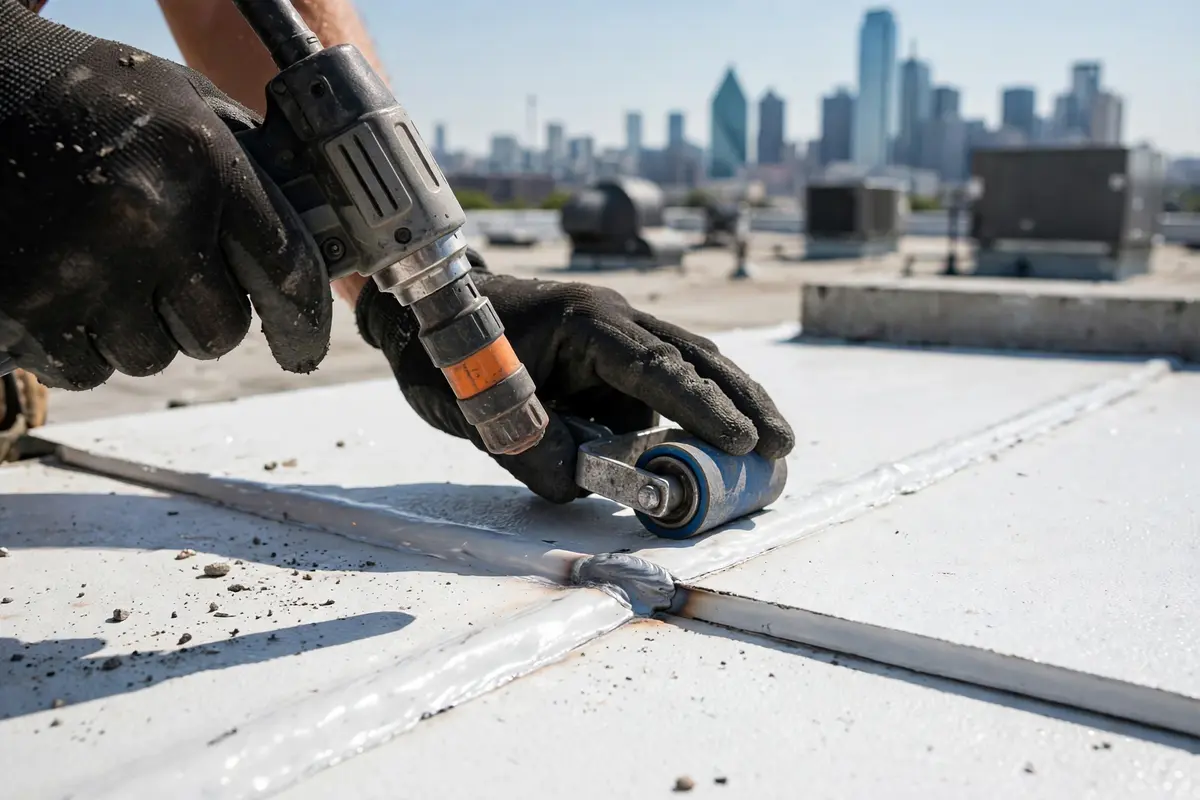
White heat-welded membrane — the most common Dallas commercial flat roof
TPO Roofing in Dallas built for Texas heat
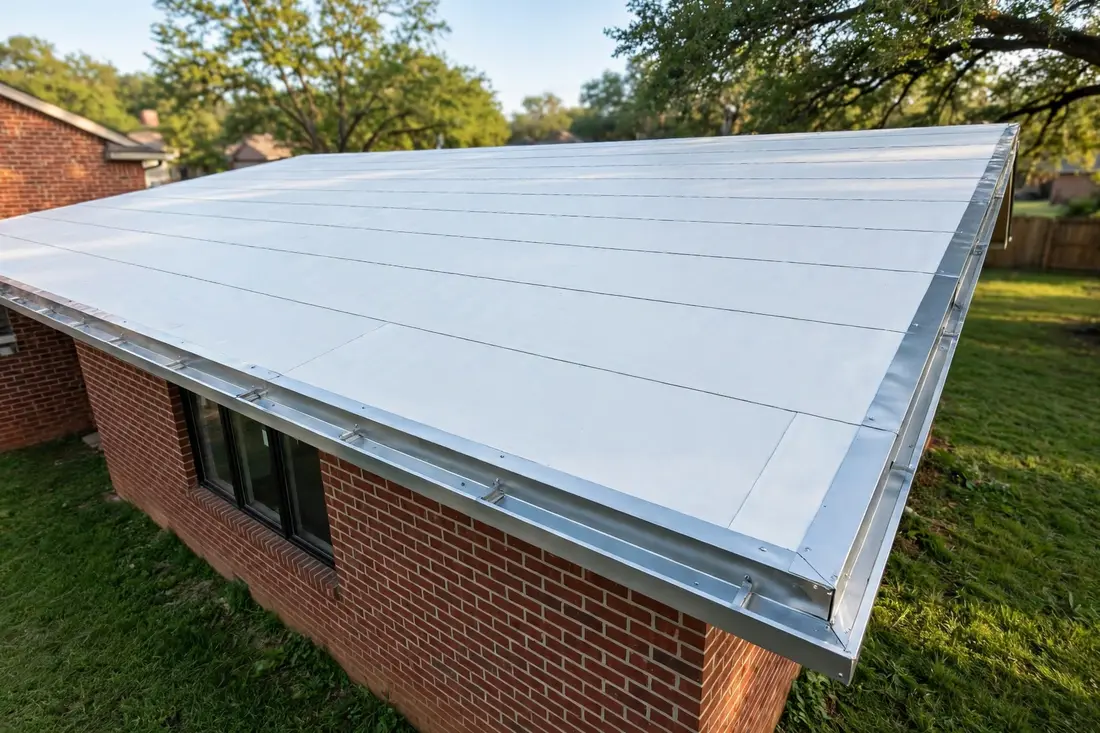
TPO is the most common commercial flat-roof system in Dallas: a white membrane, heat-welded at the seams into one continuous surface, that reflects the Texas sun instead of absorbing it. We install, repair and replace TPO roofing in Dallas for homes and commercial buildings, with the drainage corrected first and the seams welded properly.
Open 24 hours, every dayWelds probed by handPhotos at every stage
What's included
What TPO roofing includes
A TPO roof is a heat-welded white membrane system, and the installation is a welding job — every seam is fused with hot air and then probed by hand.
Fully adhered systems
Full hot-air welded seams — 1.5 inches wide, fused to the sheet, not glued — probed by hand at every joint, with the sheet pulled down by a mechanical fastening system that keeps it flat in Dallas wind.
Mechanically fastened systems
Drainage falls cut into the insulation before the sheet is laid: crickets toward scuppers, tapers that move water off the field, and no ponding left standing after the job.
Seams welded and probed
Reinforced membrane at the parapet, around equipment curbs, and under foot-traffic paths — the places a flat roof wears first.
Patches heat-welded in
Fasteners, plates and seam tape specified for a white TPO field, not borrowed from a black-rubber job.
Drains and parapets
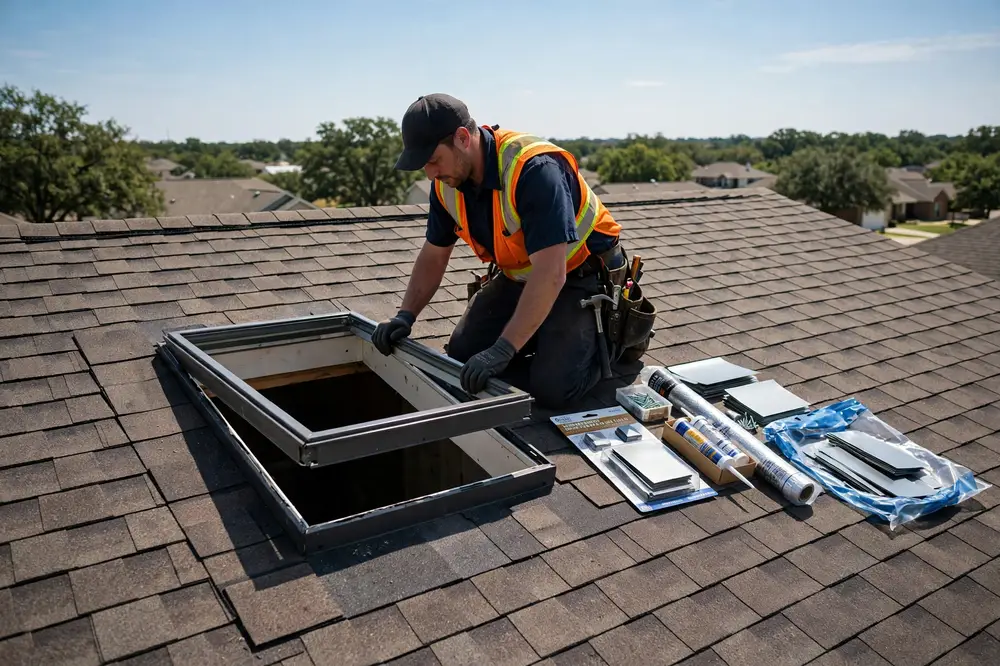
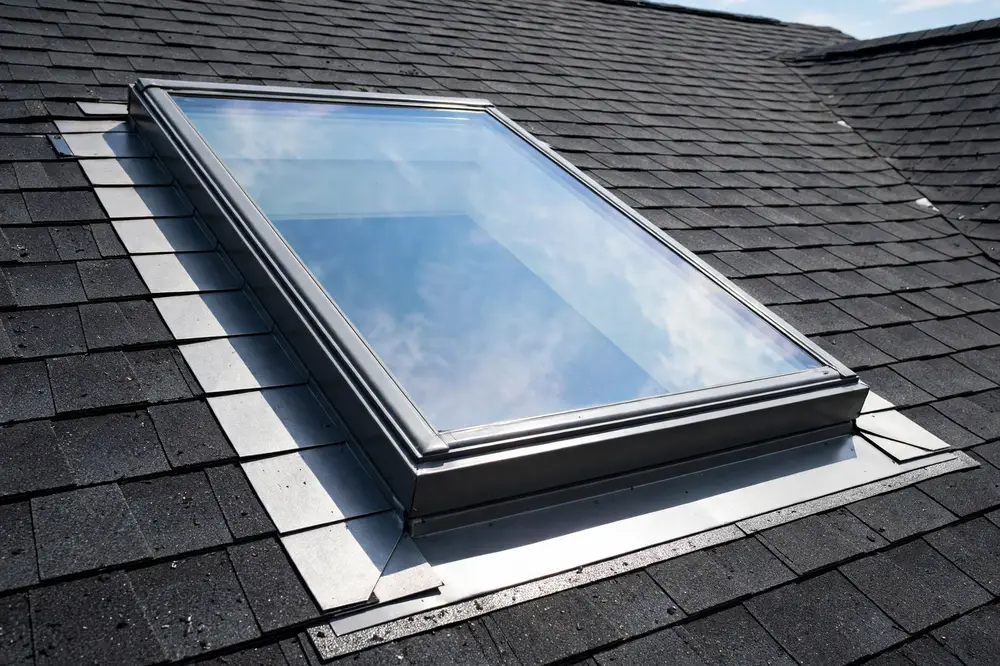
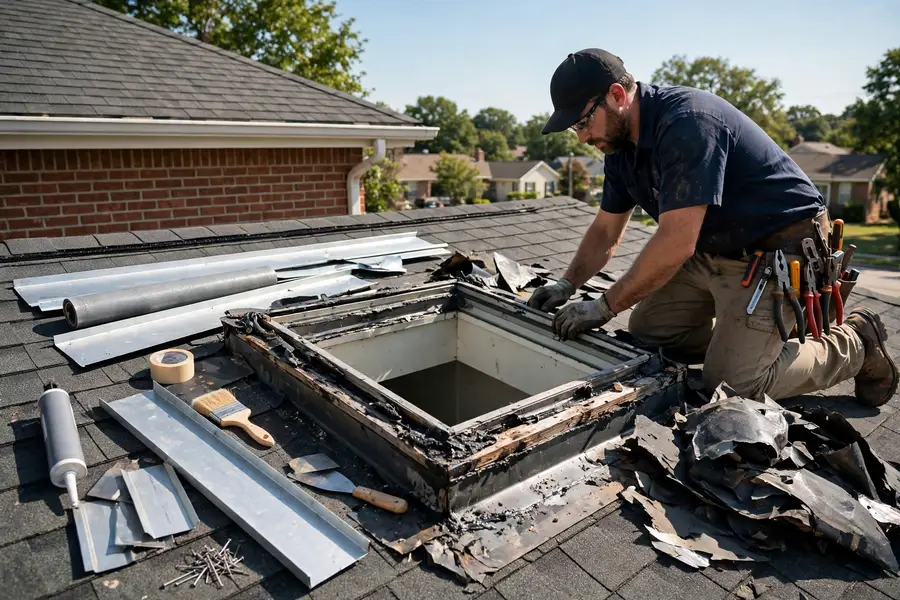
Penetrations — vents, drains and skylights — flashed with pre-formed boots and welded collars, sealed at every edge.
Permit and final inspection
A walk-through and a handover: the welds probed and written down, the drains run with water, and the roof left to drain.
Service overview
What TPO roofing in Dallas actually involves
A white heat-welded membrane, installed as a welding job — not a gluing job.
TPO is the most common commercial flat roof in Dallas because it is white, welded and repairable by welding. The sheet is a thermoplastic membrane — white on top, so it reflects the 150 to 170°F roof surface temperatures Dallas sees in summer — and the seams are fused with a hot-air welder, not glued. A welded seam is a single piece of membrane once it cools, which is why the inspection is a probe, not a look: every seam is pulled by hand to find the one that did not fuse. The failure mode is a cold weld — a seam that looks closed and opens under heat — so the repair is always a re-weld with a hot-air gun and a patch, never a tube of sealant. Compare TPO and EPDM for Dallas commercial buildings on our blog.
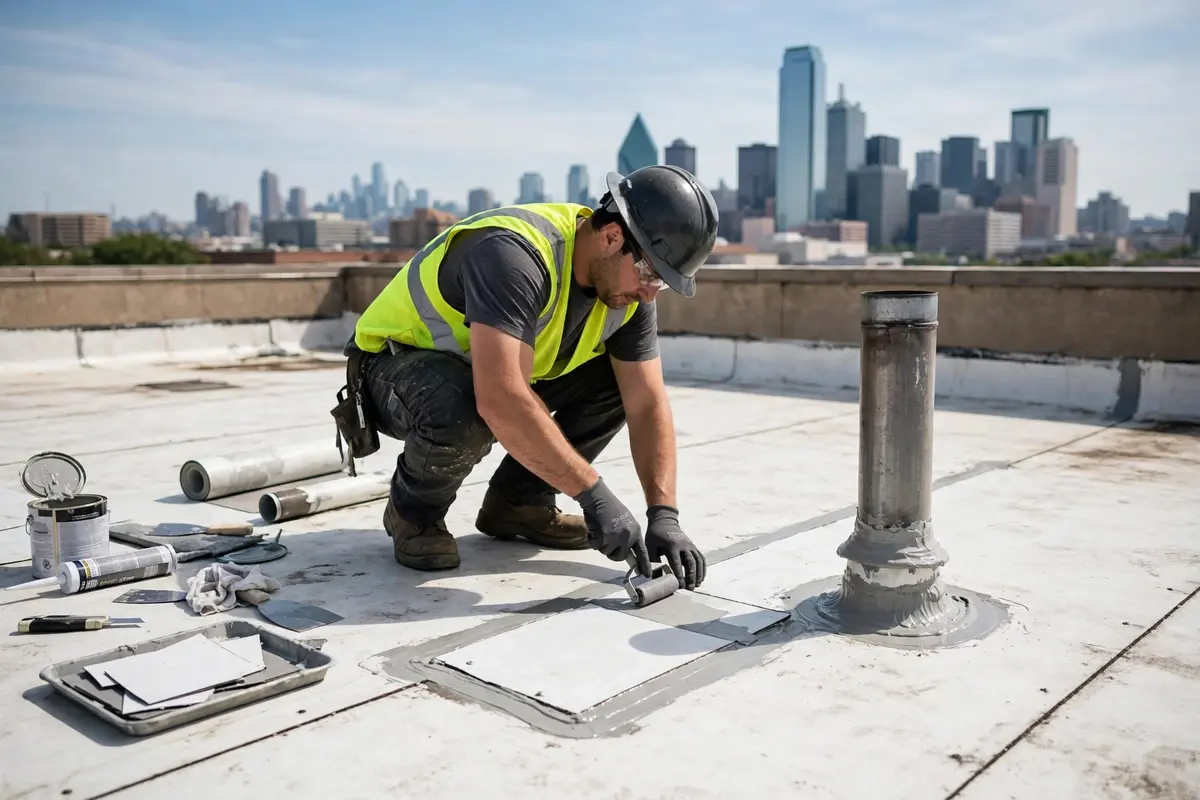
How we workWe probe every weld, check the falls, and confirm the membrane before we leave.
The service timeline
What to expect on a TPO job
A TPO installation is a welding job, and the sequence follows the weld: prepare, lay, fuse, probe, then hand over.
Inspection
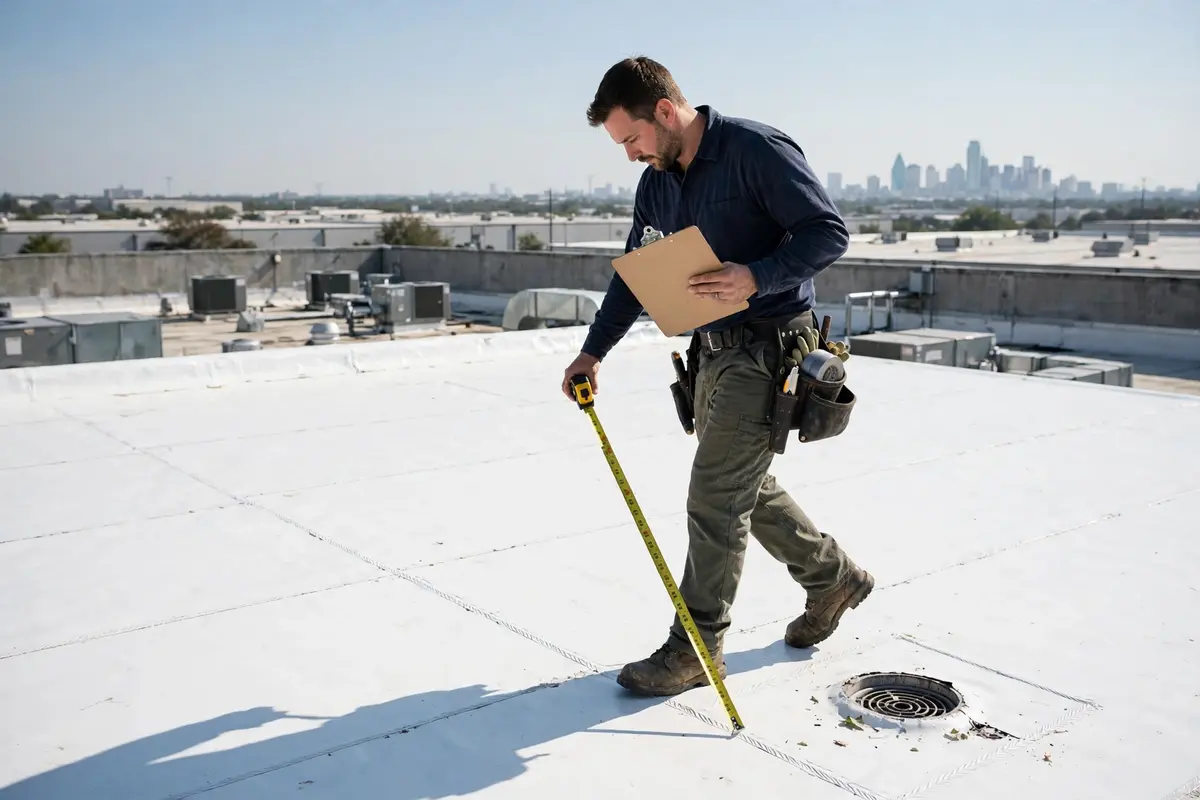
First the deck is checked and the falls are measured; then every welded seam is probed by hand — a cold weld is found by pulling, not by looking.
Scope
The white TPO sheet is rolled out, mechanically fastened, and the seams are hot-air welded at 1.5 inches wide. Every seam is probed by hand while the welder is still on site.
Preparation
Pre-formed boots and welded collars flash every parapet, curb, drain and penetration, and the field is checked for ponding before the crew leaves.
Install or repair
Once the membrane has cooled, every seam is probed a second time — a weld that looked fused can open as it contracts — and any cold weld is re-welded on the spot.
Check and handover
The handover is a seam report: every weld probed and written down, every drain run with water, and the roof left to drain.
Tools & methods
Tools and methods we use on your TPO roof
TPO is installed with heat, not adhesive — and the tools are welding tools.
Hot-air seam welder
Hot-air welder: fuses the TPO seams at 1.5 inches wide, at a temperature that melts the membrane into a single piece.
Seam roller and probe
Seam probe: a hand tool that pulls at every welded seam to find the cold weld that looks closed and is not.
Moisture survey tools
Mechanical fastening system: screws and plates that hold the sheet flat in Dallas wind while the seams are welded.
Fall and drain checks
We measure the tapered insulation against the drains, so the white field sheds water instead of ponding — a weld cannot hold under standing water.
Fall protection and edge safety
Pre-formed boots and welded collars: flash vents, drains and skylights with the same welded membrane, not with sealant.
Membrane patch kit
Reinforced membrane patches: weld a patch over a puncture with a hot-air gun, and the repair is the same material as the field.
Use cases
When Dallas owners call us for TPO
These examples show how TPO work is scoped to the seam, the flashing or the field — whichever failed.
TPO patch in Uptown
A seam that had opened on a white TPO roof over a retail unit, with water coming in at the joint. The seam was cut out and re-welded, and the membrane around it was checked for the same age and wear.
TPO repair in East Dallas
A leak at a rooftop unit curb on a flat roof over a converted space, where the flashing had never been sealed properly. New flashing, the curb re-sealed, and the membrane around it patched — the interior has stayed dry since.
Problems we solve
Problems a TPO roof solves for Dallas flat roofs
TPO fails at the weld — and a cold weld is invisible until it opens. These are the problems we see most on TPO roofs in Dallas.
Seams opening on the membrane
A seam that looked closed at install and opened under summer heat — the cold weld. The repair is a re-weld, not a tube of sealant.
Leaks at rooftop equipment
Water standing on the white field because the falls were never cut — ponding works every welded seam until one opens.
Ponding water that will not drain
Punctures from foot traffic, dropped tools and rooftop equipment — patched by welding a reinforced membrane patch over the hole.
Membrane worn thin by heat
Shrinkage and tenting at the parapet where the sheet pulls away from the wall — the flashing is reworked and the seam re-welded.
Cost factors
What shapes the cost of a TPO roof in Dallas
A TPO roof is priced as a welding job: the membrane, the falls, the welds and the flashing — and the inspection that finds the cold welds.
Roof size and access
The field: the white TPO sheet, mechanically fastened, with 1.5-inch hot-air welded seams probed by hand. The weld is the work.
Membrane thickness
The falls: tapered insulation and crickets shaped toward scuppers and drains, so the white field drains — ponding is what opens a weld.
Insulation and drainage
The details: pre-formed boots and welded collars at every parapet, curb, drain and penetration, and the handover documented seam by seam.
Customer reviews
What Dallas customers say about our TPO work
★★★★★
“His crew arrived on time, were very respectful, kept the area clean, and did excellent work on the shingles, flashing, and leak repair.”
TPO or EPDM for a Dallas flat roof?
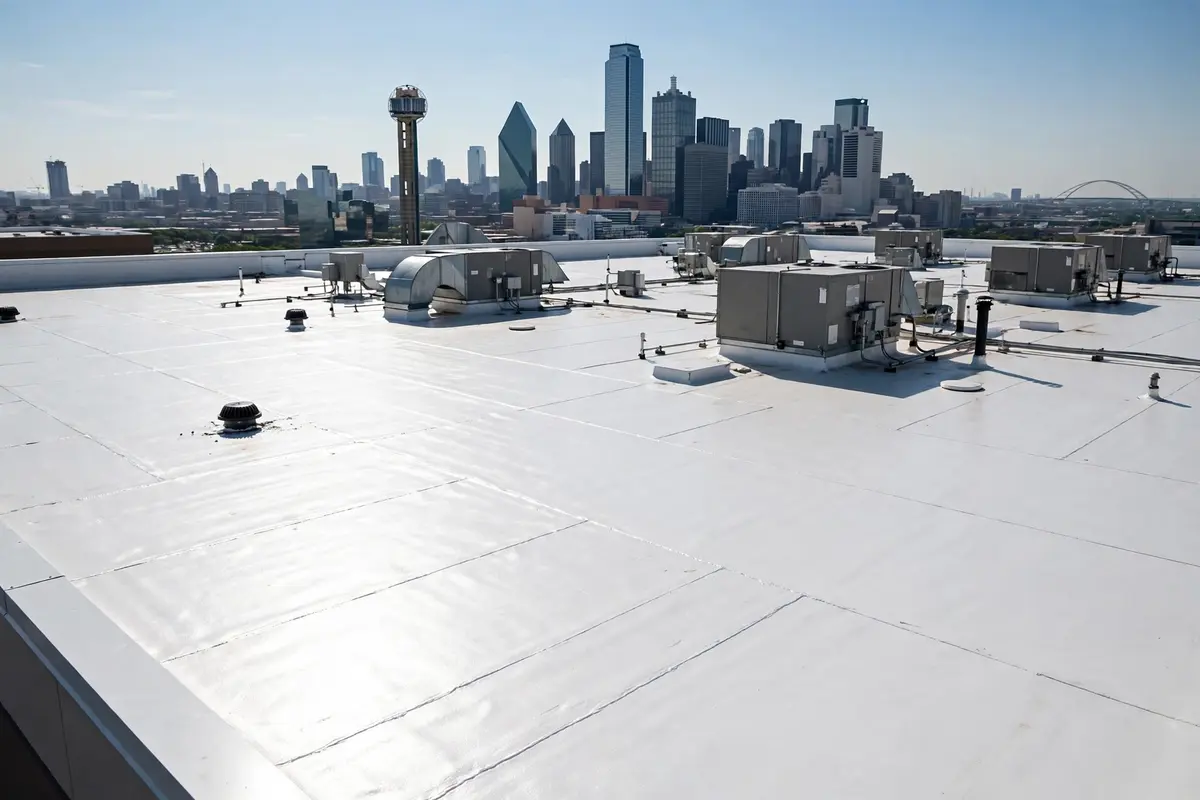
TPO is a white heat-welded membrane that reflects Texas sun, and the most common commercial flat-roof system in Dallas. The choice depends on the building, the traffic, and the budget.
Can a TPO roof be repaired?
Yes. A failed seam is cut out and a new section is heat-welded in, and a damaged membrane is patched with the same material. A weld done properly is as strong as the sheet around it. The repair starts with the cause — usually a cold weld, heat, or a flashing detail — and the fix follows it.
How long does a TPO roof last in Dallas?
A TPO roof's life in Dallas depends on the welds and the drainage more than on the sheet. Welded seams that were probed at install, falls that move water off the field, and punctures patched by welding tend to last the longest. The failure to watch for is the cold weld — a seam that looked closed and opened under summer heat — which is why the handover probes every seam by hand.
Does a TPO roof need a permit in Dallas?
Yes — a City permit comes before any new roof covering in Dallas, and we handle the permit application and the final inspection.
Ready when you are
Get your TPO roofing Dallas TX quote
An inspection, photos, and an itemised written quote for the TPO work as scoped. Call (469) 960-7533 and tell us about the welds and the water.
Talk with the local team
Request TPO Roofing
Call us at (469) 960-7533 or send a message and we will get back to you. We are open 24 hours, every day. Tell us about the flat roof and what it is doing, and we will give you a straight answer on what it needs.